The American Revolution
The PBS special The American Revolution that aired last week did not disappoint (Nov 16-21). It masterly captured the birth of the American nation which was the most significant revolution in history. Historians have praised the documentary series as an intimate portrayal of the conflicting attitudes and emotions expressed by those who fought during the war for independence.
For over a decade, Ken Burns and his talented team worked with historians and production crews to bring the story of America’s struggle for independence to life. Each of the six episodes explore different facets of the revolution, including major battles, foreign alliances, key personalities, and even little known, personal stories about American patriots, loyalists (Americans who remained loyal to the British crown), enslaved peoples, and Native Americans.

Burns’ documentary is an important film that brings to life the struggle for independence and the radical experiment of a democratic form of government. I found the six presentations enlightening in that they helped me to better understand the origins of many of the divisions that divide Americans even today. Long before the cry “No taxation without representation,” Americans struggled to find common ground with their neighbors on a variety of subjects, including such issues as independence, democracy, states’ rights, trade, and slavery.
One would think that such an important event, as the birth of our country, would be well known by every American, but that is far from the case. Many Americans have only a vague understanding of our country’s beginning. Primary and secondary schools may provide a grand overarching narrative of the Revolution, mentioning a few key figures, battles, and themes, but for the most part Americans have a superficial grasp of our national fight for independence.
As Burns notes, Americans seem reluctant to deeply delve into our origins, fearful of what they may find. Instead, many within our country rest content with the myths that surround our birth story not wanting to disturb their idyllic image of what took place some 250 years ago.
There are, indeed, national myths that cling to our collective memory that are more fiction than fact. An iconic painting, for example, shows George Washington standing on a boat crossing the icy Delaware River on Christmas night 1776. He and his men are on their way to attack Hessian soldiers encamped in Trenton, New Jersey. While he and his troops did cross the river, he most assuredly wasn’t standing on a boat. The night was stormy and large chunks of ice were scattered throughout the river, making the journey extremely hazardous, hardly conducive to one standing in a boat.

When the spy Nathan Hale was caught by the British and hung, he did not say on the way to the gallows, “I regret that I have but one life to give for my country.” I admit, though, it does make for a great story!
Contrary to what many of us have been told, Betsy Ross did not make the first American flag. That name will forever remain lost to history.
The Battle of Bunker Hill, an important engagement that revealed the American fighting spirit, wasn’t even fought on Bunker Hill. And, of course, there are many other myths that Americans take as factual and readily pass on to the next generation of Americans.
What is most assuredly factual is that the American Revolution was the first war in world history to be fought over the idea that all people were endowed with certain unalienable rights, such as life, liberty, and the pursuit of happiness. Ironically, while the Constitution proclaimed that all people were created equal, our Founding Fathers enslaved other human beings as their personal property! Contrary to what they affirmed in the Declaration of Independence, great men like Washington and Jefferson owned slaves. These epic figures in history knew that slavery was wrong, but they chose not to resist the political pressures of the day.
I was surprised to learn how diverse America was at the beginning of the Revolutionary War. Scholars estimate that in the late 1700s America was the most diversified country in the world and was comprised of Africans, Native Americans, Muslims, Catholics, Jews, Protestants, and a mix of European ethnic groups. Contrary to current ideological propaganda, America has never been a racially or religiously homogeneous country.
Even though Washington wasn’t standing on a boat crossing the Delaware, he has an almost apotheotic status in American lore, and it is rightfully deserved. But he was not a tactical military genius. He made serious battlefield blunders over and over again that might have led to British victory. He was, however, the one person most admired and trusted by those who fought under him. Time and again, he risked his life in battle, when British victory seemed all but certain, and rallied his troops to victory. The Revolutionary War would not have been won without Washington’s charismatic leadership.
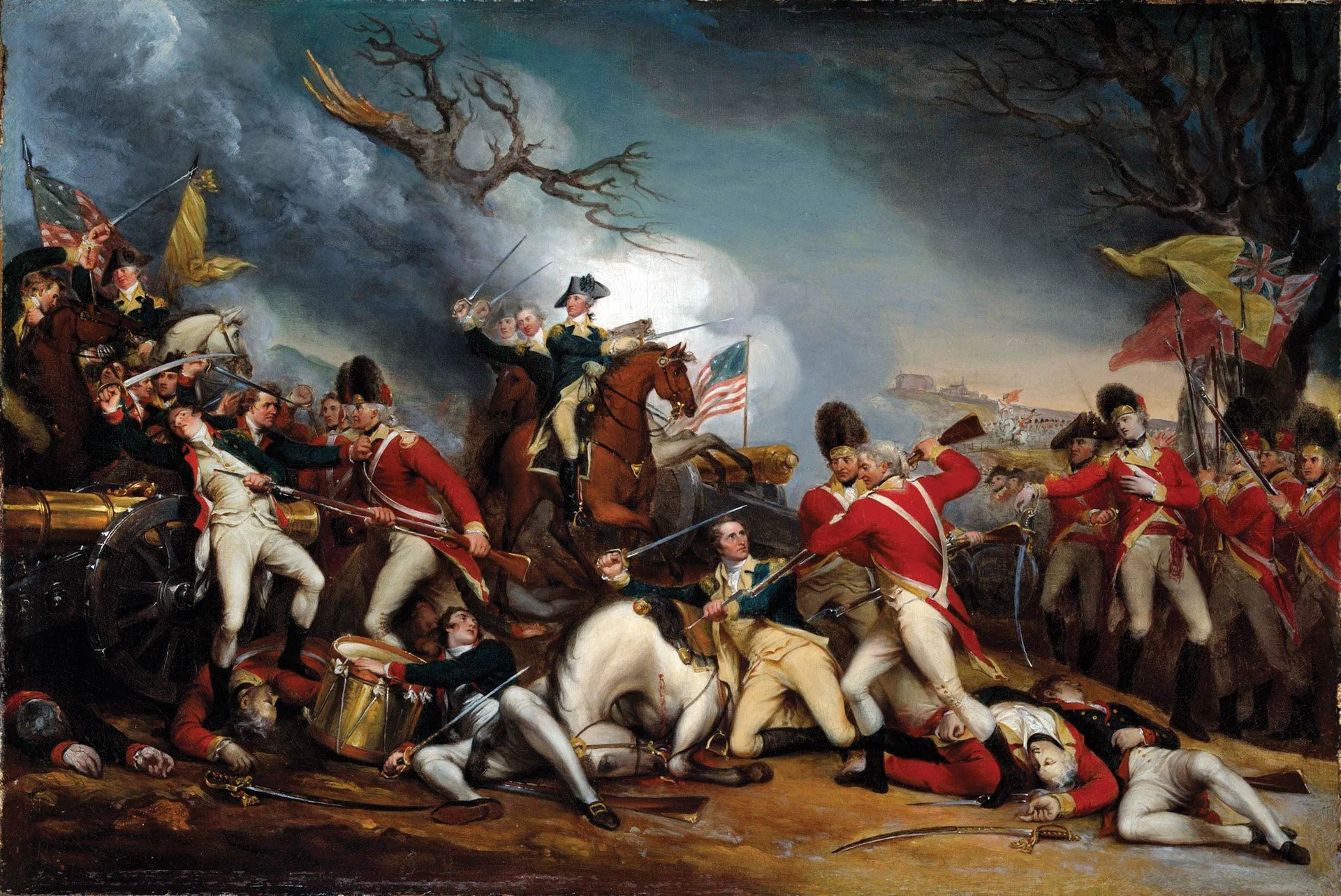
The war for American independence was a violent and bloody struggle. The American patriots fighting for freedom, as well as the British troops and loyalists, committed wartime atrocities that put to rest any image of a conflict fought between gentlemen. It was a savage and brutal war. When historians read the war correspondence of the principle military and political leaders, as well as the private letters of soldiers in the field who describe the utter savagery of the war, one wonders who exactly the good guys were.
The American patriots, with no quarter given, wiped out entire Native American settlements, killing men, women, and children. Many of these Indian settlements rivaled neighborhoods in Boston or Philadelphia in their sophistication, but they were burned to the ground without mercy. For good measure, their crops were also destroyed to make sure that any survivors could not return.
After the war, enslaved people were also treated harshly by the new American government, even though many Africans fought on the side of the patriots. While some of the enslaved who fought for liberty were given their freedom, most were forcibly returned to slavery, as were those who had escaped southern plantations.
The British, too, were guilty of mistreating indigenous people. At the conclusion of the war, the British broke promises to the Indians by ceding native lands to the American nation without consultation. This left the Indian nations vulnerable to American encroachment that led to generations of bloody conflicts.
Both Indians and slaves did not know who to align with as one government seemed as bad as the other. The abuse of Native Americans and the enslavement of African people haunts our republic to this day. We cannot change the past but we can work to make the present better. Furthermore, Americans can recognize past injustices perpetrated on minorities and strive to ensure they never happen again.
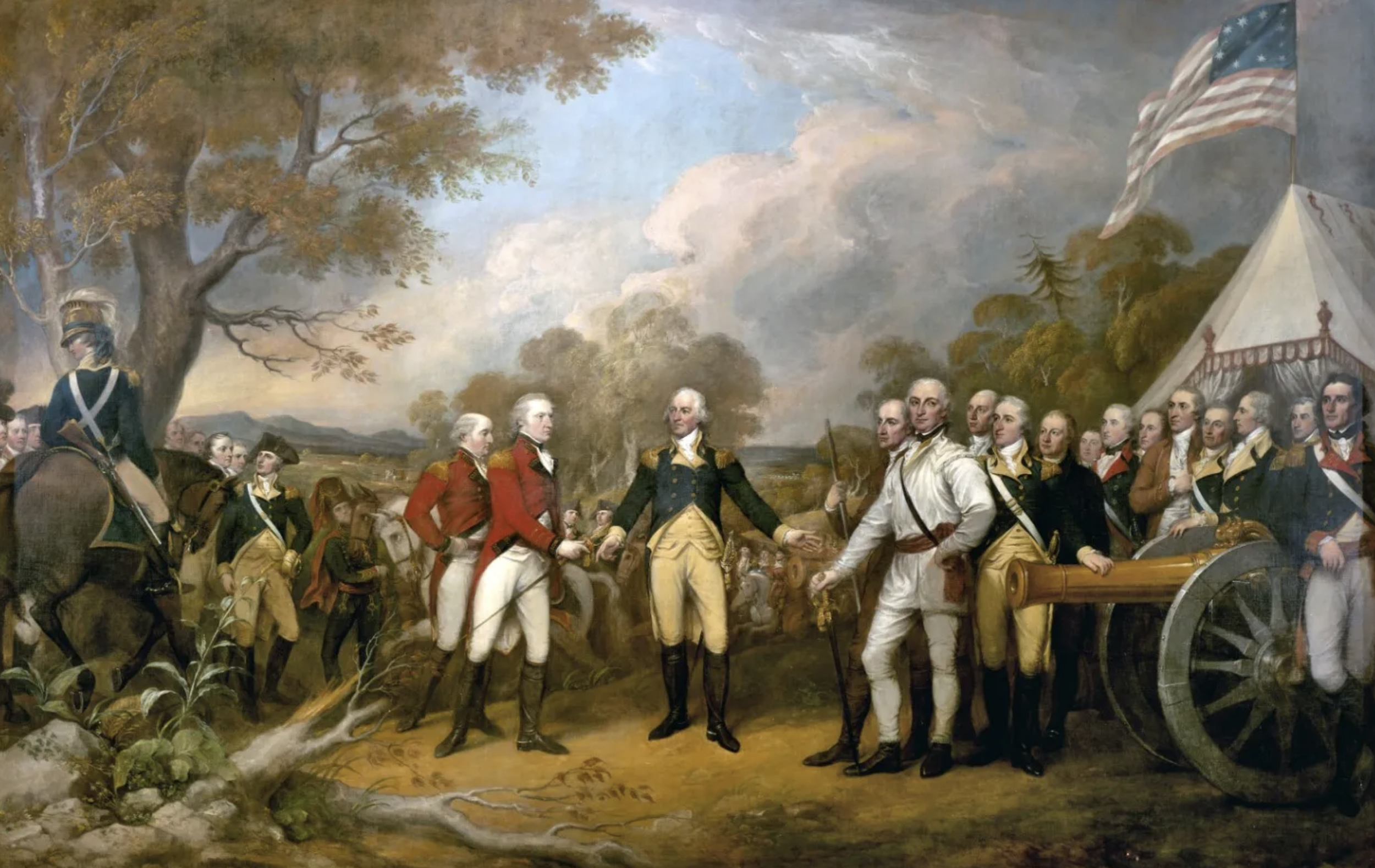
As I watched The American Revolution, I wondered which side of the civil war I would have fought on. At first blush, the answer appears obvious. Of course I would have sided with the patriots. After all, I’m an American.
Yet many Americans fought on the side of the British, some 25% of the country’s population in fact. These Americans were politically conservative and believed that remaining loyal to the king was in America’s best interest.
The American Revolution was a civil war waged between American citizens, brother against brother, neighbor against neighbor, American against American. I’m thankful I didn’t have to choose and that I have the benefit of living on this side of history.